


Pic Quiz
4.248.00 Reviews
App Specs
- Version
- 2.0.1
- Updated On
- License
- Free
- Downloads
- 1,000,000+
- Developer
- Havos Word Games
- Categories
- Trivia
- Platform
- Android
Screenshots
 Analysis by AppCompare
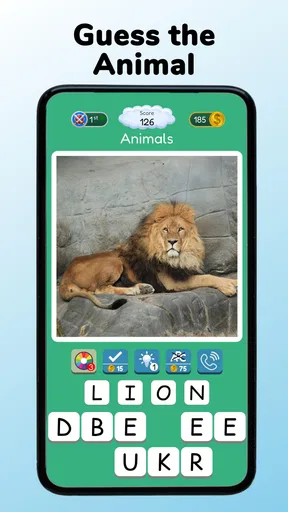
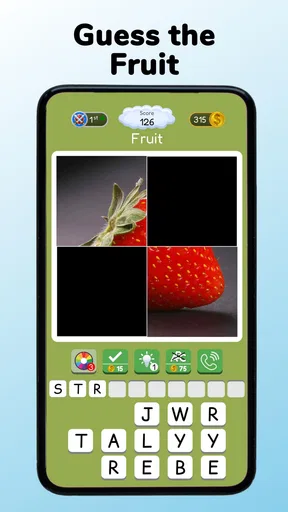
Pic Quiz is the kind of trivia game I reach for when I want a short mental break rather than a long, complicated session. The idea is simple: an image appears, and I try to identify the word connected to it. That basic format makes it easy to understand within seconds, but the quality of the experience depends on how quickly I can recognize the image, interpret the clue, and accept that the answer may be less obvious than it first appears.
After spending time with Pic Quiz, I found it best suited to casual players who enjoy visual guessing games and general-knowledge challenges. It is free to start, developed by Havos Word Games, and listed for Teen audiences. Its average rating is 4.2 from around 11 thousand ratings, while its reach of over 1 million installs suggests that the format has found a sizeable audience. Those figures do not make it automatically perfect, but they do fit my impression: this is an accessible, familiar-feeling quiz game with enough material to support repeated visits.
How the picture-based quiz works in everyday play
The central challenge is not simply remembering facts. I have to look at the image as a clue, decide which detail matters, and then connect that detail to a word. A picture can suggest an object, an activity, a place, an animal, or an idea, so the game tests visual association as much as traditional trivia knowledge. That gives it a different rhythm from a standard multiple-choice quiz.
That difference is important. In a conventional trivia app, I can often eliminate wrong answers from a list. Here, the image has to do more of the work, and my own interpretation matters. When the picture is clear, solving the answer feels satisfying because I make the connection myself. When it is ambiguous, the game can feel less like testing knowledge and more like guessing what the creator intended.
I would describe the difficulty as uneven in a way that is natural for this format. Familiar images can be solved almost immediately, while a less direct clue may require me to pause and examine what I am seeing. That variation keeps the experience from becoming completely automatic, although players who prefer carefully calibrated difficulty may find the jumps frustrating.
The game’s strongest use case is a spare moment: waiting for transport, taking a short break between tasks, or sharing a few rounds with someone nearby. I can start thinking without needing a long explanation, and the visual format makes it more approachable than a quiz built entirely around text. It also works well for players who enjoy word puzzles but do not want a crossword layout or a large board of rules.
Why the visual clues change the strategy
One practical tip is to avoid naming the first thing that comes to mind. I get better results when I ask what the image is trying to represent rather than what it literally shows. A photograph of an item may point to a broader category, a familiar phrase, or an associated action. That small change in approach reduces the number of answers I enter impulsively.
Worth Reading Before You Choose

EA SPORTS FC Mobile 26 Is a Bigger Football Game, but It Takes Time

Flipboard Shows What News Apps Must Do Beyond the Feed

Switching to Android Auto Means Rethinking Your Driving Routine

Google Calendar Makes a Crowded Week Easier to Manage

Ludo King Makes the Most of the Minutes Between Plans

Baby Panda World Brings Quick Play to Modern Phones, but Its Game Library Feels Busy
I also find it useful to inspect the whole picture before focusing on its most obvious feature. Background details, positioning, color, and the relationship between objects can all affect the intended answer. This is one of the more interesting aspects of the game: the image is not merely decoration around a question. It is the question, so careful observation is part of the answer process.
Another helpful habit is to treat mistakes as information about the game’s vocabulary. If an answer does not match the way I described the picture, I can adjust how I interpret later clues. The game rewards flexibility more than a single narrow area of expertise. Someone with excellent general knowledge may still struggle if they read every image too literally.
Progress, pressure, and the cost of getting stuck
Picture quizzes can create a mild form of pressure even when they are designed for relaxation. A player may want to keep moving, protect a successful run, or avoid spending too much time on one clue. That pressure is not necessarily a problem, but it changes how I play. I become more likely to make a quick guess, especially when I feel that hesitation is slowing the session down.
For that reason, I think Pic Quiz is more enjoyable when I treat progress as secondary to solving. If I turn every difficult clue into a test of speed, the ambiguous images become irritating. If I allow myself to study the picture and think through several associations, the same clue feels more like a small puzzle. The game works best when I set my own pace instead of trying to force every round into a rapid-fire contest.
The free entry point is a clear advantage for cautious players. I can understand the basic appeal before deciding whether it deserves regular space on my phone. The listed in-app purchase range runs from $0.99 to $27.99 per item, so spending can vary considerably depending on which optional items a player chooses. I would not treat the presence of purchases as a reason to avoid the game, but I would decide on a personal limit before buying anything.
That is especially sensible in a game built around curiosity and unfinished questions. When I am stuck, the desire to continue can make a paid option feel more tempting than it would during an easy round. My advice is to regard any purchase as convenience rather than proof of skill. If I cannot solve a clue, paying to move forward may reduce the challenge that made the game interesting in the first place.
The available purchase information establishes the price range, but it does not tell me enough to make a broader claim about how spending affects the full experience. I therefore judge the free version first. A player who wants a completely purchase-free routine should be prepared to check the in-game options carefully and decide whether the available free play meets that expectation.
Is the challenge fair for different kinds of players?
Fairness in a picture quiz is more complicated than simply asking whether every player sees the same image. The real issue is whether the clue gives a reasonable path to the answer. A visually direct image feels fair even when I do not know the word immediately. A vague image can feel unfair when several answers seem equally plausible and only one wording is accepted.
Pic Quiz has a natural advantage here because its rules are easy to understand. I am not learning a complicated scoring system or managing a large set of resources. The contest is mainly between my interpretation and the intended word. That simplicity makes the game approachable for newcomers, families, and casual players who might be put off by a more competitive trivia platform.
At the same time, the format cannot be perfectly neutral. Visual recognition depends on experience, language, culture, and personal familiarity. An image that seems instantly recognizable to one player may be obscure to another. I would not use a difficult round as evidence that I lack knowledge; sometimes the clue simply favors a different background or way of thinking.
This is also why I see Pic Quiz as a poor substitute for a serious competitive trivia game. Traditional quiz platforms can compare players using the same written question and a clearly defined answer. Here, interpretation is part of the challenge, so results are less useful as a measure of objective knowledge. The game is better for personal progress and friendly discussion than for proving who is the most informed person in a group.
For a shared session, I recommend saying possible answers aloud before committing to one. That turns uncertain clues into conversation rather than silent frustration. It also reveals how differently people read the same image, which is one of the most enjoyable social elements of this type of game. A child, a parent, and a friend may each notice a different detail and reach a different answer for perfectly understandable reasons.
Where it fits among other trivia choices
Compared with a general-knowledge quiz, this game asks me to observe before I recall. That makes it less suitable when I specifically want questions about history, science, geography, or current events. If those subjects are my priority, a conventional trivia app with written questions will probably give me a clearer and more focused challenge.
Compared with a crossword or word-search game, Pic Quiz offers less control over the shape of the problem. I am not building answers from intersecting letters or scanning a grid for hidden words. Instead, I depend on the image and my ability to connect it with language. I prefer this when I want quick recognition puzzles, but I would choose a crossword when I want a slower, more structured word workout.
It also differs from multiplayer quiz games because the main experience is personal rather than social. There is no need to wait for opponents or coordinate a group before starting a round. That makes it convenient for solo play, but players looking for live competition, rankings, or a strong community element should look elsewhere. Pic Quiz’s appeal is the immediate visual challenge, not the surrounding competitive ecosystem.
One less obvious strength is that the game can work as a vocabulary prompt. When an image leads me to a word I know but rarely use, I become more aware of how visual memory and language connect. I would not call it a dedicated language-learning tool, because the verified store information does not establish that purpose, but an English learner who already understands the game’s language may still find the image-to-word relationship useful.
What I would check before committing to regular play
The current version is 2.0.1, and the listed minimum operating-system requirement is Android 7.0. That makes the compatibility question straightforward for many Android users, but anyone using an older phone should check the device requirement before planning around the game. The title is also marked for Teen audiences, so parents should consider that rating alongside the actual suitability of the images and the way purchases are handled on their device.
I would also pay attention to how I feel after several consecutive rounds. The basic idea is easy to understand, and that can be a benefit, but it may also become repetitive for players who need constant changes in mechanics. If I enjoy visual association itself, repeated picture clues remain pleasant. If I need evolving rules, timed events, or a deeper progression system, the straightforward format may lose its appeal sooner.
Another point is the difference between recognition and deduction. Some players want every answer to be logically derivable from the information on screen. Others enjoy the feeling of suddenly recognizing a familiar image. Pic Quiz leans toward recognition and association, so I would skip it if I find image-based ambiguity more annoying than entertaining.
The game is also not my first recommendation for someone who wants a quiet, completely pressure-free puzzle. Even without a formal competitive focus, the urge to solve the next clue can make the session feel demanding. A traditional untimed word puzzle may be a better match for players who dislike guessing or who want to work through an answer with several confirmed letters.
My spending rule and overall trust assessment
I approach the purchase system conservatively. Because the game is free to start and individual purchases are listed between $0.99 and $27.99, I would play enough of the free experience to decide whether the image style and clue logic suit me before spending. I would also avoid buying simply because I am stuck on one difficult picture. Waiting, discussing the clue with someone else, or returning later often preserves more of the satisfaction.
I do not see a reason to assume that spending is necessary for enjoyment, and I would not promise that every optional purchase improves the game equally. The responsible conclusion is narrower: the game can be tried without an upfront price, while optional items may cost from a small amount to a substantially larger one. That is enough information for me to recommend setting a budget and checking each purchase prompt carefully.
Havos Word Games has chosen a format that is easy to explain but not entirely easy to master. The best moments come when an image seems ordinary at first and then suddenly points to the right word. The weakest moments come when I understand the picture but cannot tell which interpretation the game expects. That tension is not a flaw in every round, but it is the main trade-off I would want a friend to understand before installing it.
My verdict is positive for casual visual-trivia fans, especially people who want a free starting point and short sessions that can be played alone or discussed with others. I would recommend it to someone who likes guessing from images, enjoys word associations, and can tolerate occasional ambiguity. I would steer a competitive trivia specialist toward a more structured multiplayer quiz, and I would steer a serious word-puzzle fan toward a crossword or letter-based game.
In the end, Pic Quiz earns its place as a light, approachable picture-guessing game rather than as a complete trivia platform. I trust it most when I use it for what it does well: turning everyday images into small moments of observation and recall. Start with the free experience, keep spending deliberate, and judge the game by whether its clues make you curious rather than merely determined to get past them.
Pros
- Simple picture-based gameplay is easy to understand for all ages.
- Short rounds make it convenient for quick sessions.
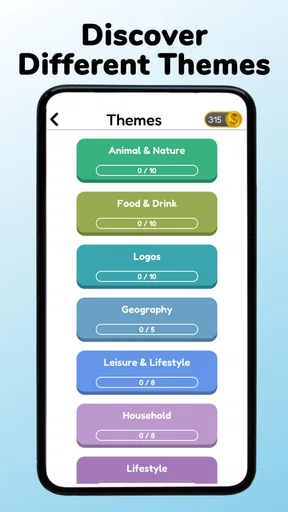
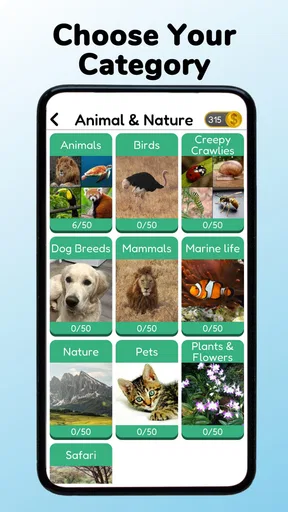
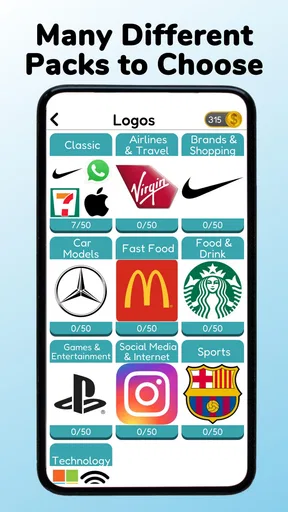
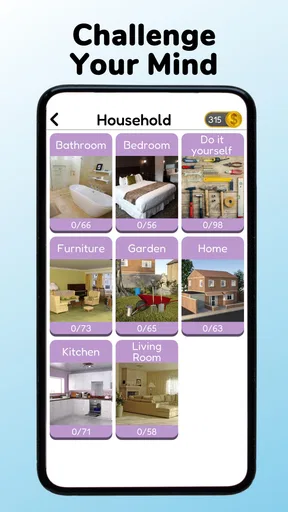
- Wide range of image categories keeps the quiz varied.
- Hints can help players progress when an answer is difficult.
- Useful for improving visual recognition and vocabulary.
Cons
- Some answers may feel subjective or unclear.
- Difficulty can vary significantly between consecutive questions.
- Hints and extra attempts may be limited or require rewards.
- Repeated images can reduce the challenge over time.
- Ads may interrupt gameplay
- especially between quiz rounds.
FAQs for Pic Quiz
What is Pic Quiz and how does it work?
Pic Quiz is a picture-based trivia game where you identify people, places, objects, brands, characters, or other subjects shown in an image. After selecting an answer, the game usually provides immediate feedback and lets you continue through additional questions. The exact categories, difficulty, and quiz structure may vary depending on the version available on your device.
Is Pic Quiz free to download and play?
Pic Quiz can generally be downloaded at no initial cost, but the free version may include advertisements, optional purchases, or restrictions on certain content. Before installing, check the app’s store listing for current pricing, subscription details, and in-app purchase information. This is particularly important if children will use the game or if purchases are enabled on the device.
Does Pic Quiz require an internet connection?
Some parts of Pic Quiz may work without a constant internet connection, especially if the questions and images are already stored on the device. However, an internet connection may be necessary for downloading new quiz packs, displaying advertisements, synchronizing progress, or accessing online features. Offline availability can differ by platform and app version, so test the game after installation if offline play matters to you.
Is Pic Quiz suitable for children and families?
Pic Quiz can be an entertaining choice for casual family play because its image-based questions are easy to understand and do not usually require complicated controls. Nevertheless, parents should review the age rating, advertising, question topics, and any external links before allowing younger children to play. Some versions may also offer purchases, so parental controls are recommended.
What should I do if Pic Quiz crashes or does not load correctly?
If Pic Quiz crashes, freezes, or fails to display images, first close and reopen the app, then check that your device has enough free storage and is running a supported operating system. Updating the app and restarting the device can also help. If the problem continues, reinstalling may be useful, although you should confirm whether progress is backed up before deleting the application.


